What Is a Racing Simulator Game?
Quick answer: A racing simulator game is a type of video game designed to closely mimic the physics, handling, and environment of real-world motorsport, letting players experience driving or riding high-performance vehicles in a virtual setting. These games prioritize realism, offering detailed tracks, accurate vehicle behavior, and support for specialised controllers.
Racing simulator games, often called “sims” or “sim racing games,” are a beloved subgenre of racing games that aim to replicate every aspect of motorsport. Unlike arcade racers, which focus on fun and accessibility, sims strive for authenticity—making them popular with both casual fans and professional drivers.
From home setups in Mumbai to professional eSports arenas in Europe, racing simulators have become a global phenomenon. They attract everyone from Formula 1 hopefuls to gamers who dream of tackling the Nürburgring or the Buddh International Circuit—without ever leaving their living rooms.
Key takeaways
- Racing simulator games are designed to replicate real vehicle dynamics and motorsport environments.
- They use advanced physics engines, realistic tracks, and support for steering wheel and pedal controllers.
- Popular sim racing titles include iRacing, Assetto Corsa, Gran Turismo, and rFactor 2.
- Sim racing is used for both entertainment and real-world driver training, including in India.
- Sim racing communities host online competitions, leagues, and even international eSports events.
What is a racing simulator game?
A racing simulator game is a video game that strives to replicate the real-life experience of racing, focusing on authentic vehicle handling, track surfaces, and racing rules. Unlike arcade racing games, which exaggerate speed and handling for excitement, simulators use physics engines to model tire grip, suspension, aerodynamics, and even weather conditions. The aim is to make players feel as close as possible to being in a real race car or bike, whether that’s a Formula 1 machine, a GT car, or a MotoGP superbike.
Simulators often support specialised hardware, such as force-feedback steering wheels, pedal sets, and even motion platforms. This hardware, combined with the game’s software, creates a deeply immersive experience. Many professional drivers use racing simulators for practice and learning new tracks. In India, the popularity of sim racing is rising, with dedicated sim racing cafes and events in major cities like Delhi and Bengaluru. Globally, sim racing is not just entertainment—it’s a training tool and a competitive sport in its own right.
How do racing simulators differ from arcade racing games?
Racing simulators differ from arcade racing games primarily in their focus on realism. While arcade games like Need for Speed or Burnout prioritise fast thrills and exaggerated action, simulators aim to mimic real-world driving physics and vehicle behavior.
- Physics: Simulators use complex calculations to determine how cars react to steering, acceleration, braking, and track surfaces. Arcade games simplify these for easier play.
- Controls: Simulators often require precise steering wheel and pedal setups, while arcade racers are designed for gamepads or keyboards.
- Tracks: Sim games feature laser-scanned real-world circuits, while arcade games may include fantasy tracks or shortcuts.
- Damage and penalties: Simulators model realistic damage and enforce racing rules, while arcade games often ignore or minimize these elements.
For example, in a sim like Assetto Corsa, taking a corner too quickly might result in tire wear or a spin. In an arcade game, the same maneuver is likely to succeed with little penalty. This attention to detail is what makes sim racing both challenging and rewarding for enthusiasts.
What features make a racing simulator realistic?
The realism of a racing simulator comes from several key features that set it apart from casual racing games. The most important are:
- Physics engine: Simulates tire grip, weight transfer, suspension movement, and aerodynamics. This determines how the vehicle feels and behaves on different surfaces and in various weather conditions.
- Laser-scanned tracks: Many simulators use laser scanning to capture track bumps, curbs, and elevation changes with millimeter accuracy. This is why famous circuits like Suzuka, Silverstone, and Spa-Francorchamps feel so authentic in games.
- Force feedback: Steering wheels with force feedback replicate the resistance and vibration a real driver feels. This allows players to sense understeer, oversteer, and road texture.
- Real-world car data: Vehicle models are built using real specifications, including weight distribution, engine power, and tire types.
- Dynamic weather and time: Some simulators change lighting, temperature, and weather mid-race, affecting grip and visibility.
- Advanced AI and online racing: Intelligent computer opponents and robust multiplayer systems simulate the unpredictability of real racing.
All these features combine to make sim racing a deeply engaging and skill-based hobby.
What hardware do you need for sim racing?
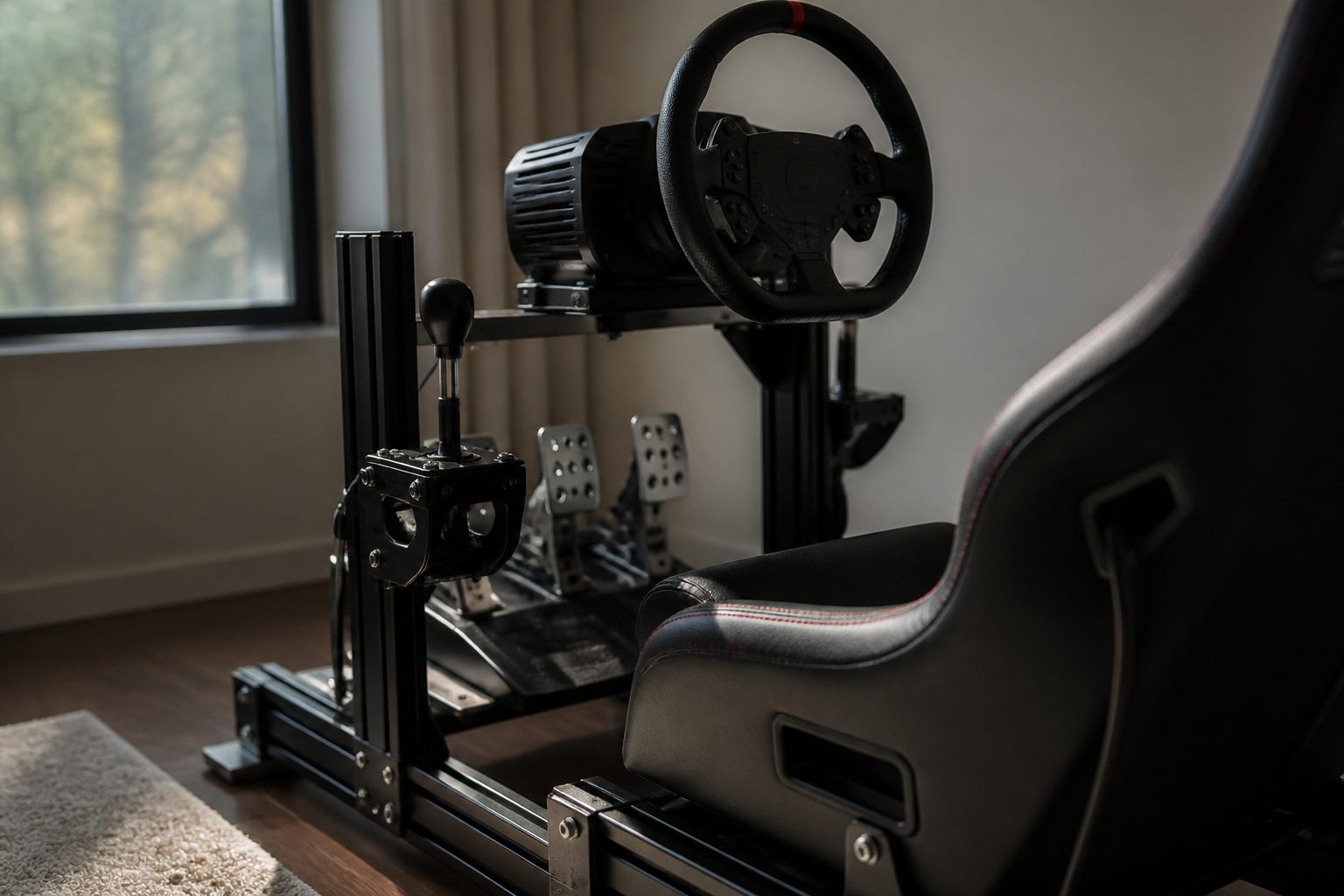
While you can start sim racing with a basic PC or console and a gamepad, most enthusiasts invest in dedicated hardware for the most immersive experience. The essential hardware includes:
- Steering wheel and pedals: A force-feedback wheel and pedal set is the most important upgrade. It lets you feel the car’s reactions and control throttle, brake, and clutch with precision.
- Racing seat or cockpit: A sturdy frame holds your hardware in place, mimicking a real car’s seating position.
- Shifter: For manual gear changes, many sim racers use a separate gear shifter.
- PC/Console: Most modern sims run on Windows PCs, PlayStation, or Xbox. PC offers the most flexibility and realism.
- Display: Options range from a single monitor to triple screens or virtual reality headsets for a wraparound view.
Some advanced setups include motion platforms that tilt and sway in response to driving inputs, but these are expensive and usually found in professional training centers or gaming cafes. In India, sim racing lounges in cities like Mumbai and Bengaluru offer access to high-end rigs for enthusiasts who want to try before they buy.
Which are the most popular racing simulator games?
Several racing simulators have built devoted fanbases worldwide, each with their own strengths. Here are some of the most widely recognised titles:
- iRacing: Known for its online leagues, laser-scanned tracks, and subscription model. Used by real racing drivers for practice.
- Assetto Corsa and Assetto Corsa Competizione: Popular for their mod support and realistic physics. Competizione focuses on GT3 racing.
- rFactor 2: Favoured for its advanced tire model and dynamic weather.
- Gran Turismo (PlayStation): A console-based sim with a massive car roster and esports events.
- Forza Motorsport (Xbox/PC): Offers a blend of realism and accessibility, with a wide variety of vehicles and tracks.
All these games support online racing, regular updates, and a wide range of vehicles—from classic cars to modern supercars and bikes. In India, Gran Turismo and Assetto Corsa are especially popular due to their accessibility and active online communities.
How do real racing drivers use simulators?
Real-world racing drivers—from Formula 1 stars to MotoGP champions—use simulators for track learning, race preparation, and skill development. Teams invest in advanced simulators that replicate their actual race cars, complete with telemetry data and motion platforms.
- Track familiarisation: Drivers practice new circuits virtually, learning braking points and racing lines before arriving at the real venue.
- Setup testing: Engineers use simulators to test car setups and strategies in various conditions.
- Skill practice: Simulators help maintain sharp reflexes and improve consistency.
Indian racing drivers—especially those competing in international series—often use sim racing to prepare for unfamiliar tracks. Simulators have become so realistic that some drivers say the transition to real racing feels natural, especially when using high-end rigs with motion feedback and triple screens.
What is sim racing eSports?
Sim racing eSports is the competitive side of racing simulators, where players compete in organised online events, leagues, and tournaments. These competitions range from amateur races to professional series with substantial prize money, sponsorships, and global recognition.
- Online leagues: Platforms like iRacing and Gran Turismo host weekly races and championships.
- Major tournaments: Events such as the FIA Gran Turismo Championships attract thousands of participants worldwide.
- Indian scene: India hosts growing sim racing tournaments, with participants competing internationally and locally.
Sim racing eSports gained extra attention during the COVID-19 pandemic, when real-world racing paused and professional drivers joined online events. Today, eSports teams scout sim racers for talent, and some sim racing champions have even earned real-world drives in racing series.
How can you get started with sim racing?
Getting started in sim racing is easier than ever. Here’s how you can begin:
- Choose your platform: Decide whether you’ll race on PC, PlayStation, or Xbox. PC offers the most options, but consoles are more affordable.
- Pick a game: Start with an accessible title like Gran Turismo or Forza Motorsport. For serious realism, try Assetto Corsa or iRacing.
- Get the right hardware: Begin with a gamepad or invest in a basic steering wheel and pedal set. Upgrade as you gain experience.
- Join online communities: Forums, Discord servers, and local clubs offer advice, races, and camaraderie.
- Practice and participate: Learn tracks, improve your skills, and join online races or leagues.
In India, look for sim racing cafes or lounges to try professional setups before investing. Many local clubs host regular meetups and online races, making it easy for new drivers to find support and competition.
Glossary: Common sim racing terms
| Term | Definition |
|---|---|
| Sim racing | The practice of racing virtually using realistic simulators. |
| Force feedback | Technology in steering wheels that simulates real driving sensations. |
| Laser-scanned track | A virtual track recreated with laser technology for high accuracy. |
| Setup | Adjustments made to a virtual car’s suspension, tires, and aerodynamics. |
| Telemetry | Data collected from the car and track, used to improve performance. |
| eSports | Competitive gaming, including organised sim racing tournaments. |
Frequently asked questions
What is the difference between a racing simulator and a racing game?
A racing simulator focuses on realistic driving physics and authentic vehicle behavior, while a racing game may prioritise fun and accessibility over accuracy. Simulators are used for both entertainment and training, whereas arcade racing games are designed for casual play.
Can you learn real driving skills from racing simulators?
Yes, many aspects of racing—such as track learning, car control, and racing strategy—can be developed using simulators. However, real-world factors like physical forces and risk are unique to actual driving and cannot be fully replicated virtually.
Do racing simulators work with regular game controllers?
Most racing simulators support standard gamepads or keyboards, but for the best experience—and more precise control—a steering wheel and pedal setup is recommended. Many simulators offer customisable controls for various hardware.
Are there Indian tracks and cars in racing simulators?
Some international simulators feature Indian circuits like the Buddh International Circuit. Modding communities also create Indian cars and tracks for games such as Assetto Corsa, allowing fans to race familiar vehicles and locations.
What is the best sim racing game for beginners?
Gran Turismo and Forza Motorsport are considered beginner-friendly due to their balance of realism and accessibility. They offer adjustable difficulty, driving assists, and large online communities, making them ideal entry points for new sim racers.
How expensive is it to start sim racing?
Entry-level sim racing can begin with a basic gamepad and a copy of a racing game. For a more immersive experience, a decent steering wheel and pedal set typically costs as much as a mid-range smartphone. High-end rigs and motion platforms are optional and significantly more expensive.
The bottom line
Racing simulator games blend the thrill of motorsport with the precision of real driving physics, offering an accessible, safe, and endlessly challenging hobby for car and bike lovers worldwide—including a growing community in India.